On December 20–21, 2025, the PHBS-IER Conference, co-hosted by the Peking University HSBC Business School (PHBS) and the International Economic Review (IER), was held at the PHBS Shenzhen campus. Centered on the theme “Demographic Change and Migration: Facts, Models, and Policy Implications,” the conference attracted nearly 150 senior professors and early-career scholars from leading universities across the world to attend in person, while the live online broadcast garnered more than 13,000 views. Chairs for the conference included PHBS Professor Li Kai, Tenured Associate Professor Cai Xiaoming, and Assistant Professors Ma Xiao and Wang Yicheng.
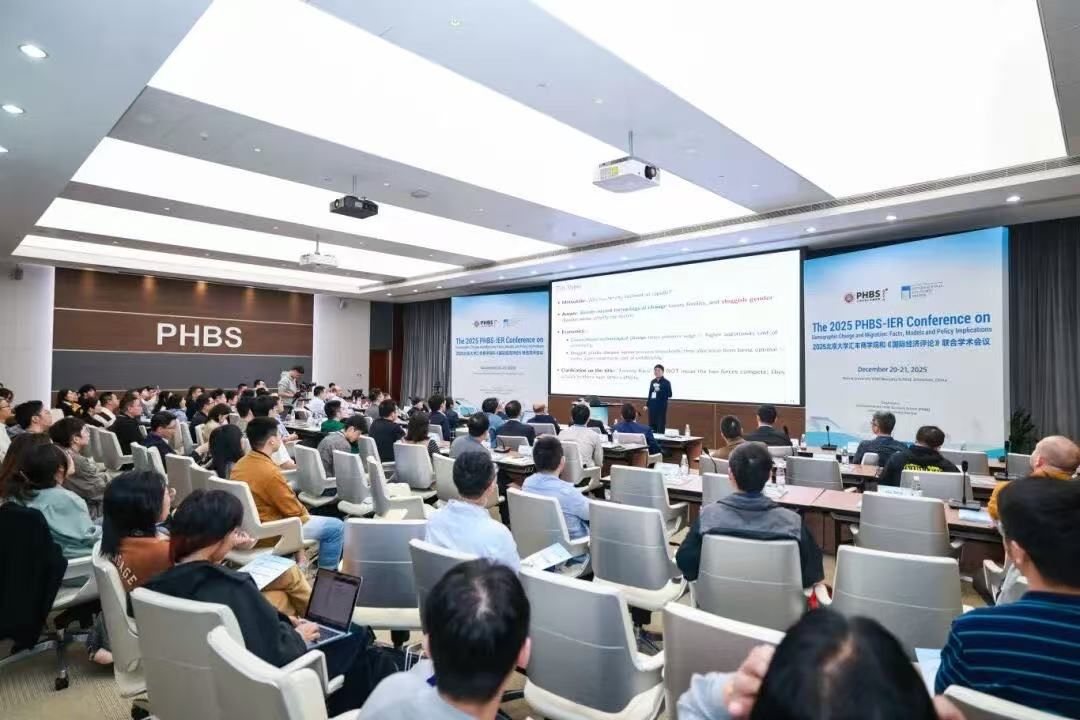
The 2025 PHBS-lER Conference

Wang Pengfei and Dirk Krueger
Wang Pengfei, Peking University Boya distinguished professor and dean of PHBS, and Dirk Krueger, professor at the University of Pennsylvania and editor-in-chief of IER, each delivered speeches on behalf of the organizers. Professor Wang expressed his gratitude to the IER editorial board, faculty members, and student volunteers for their exceptional efforts in organizing the conference. He reflected on the success of the inaugural conference and the positive role it has played in fostering the school’s academic ecosystem. Professor Krueger thanked the participants and organizers, noting that the collaboration between IER and PHBS has continued to deepen, with substantial progress made in promoting high-quality research. He looked forward to more outstanding output from this year’s conference.
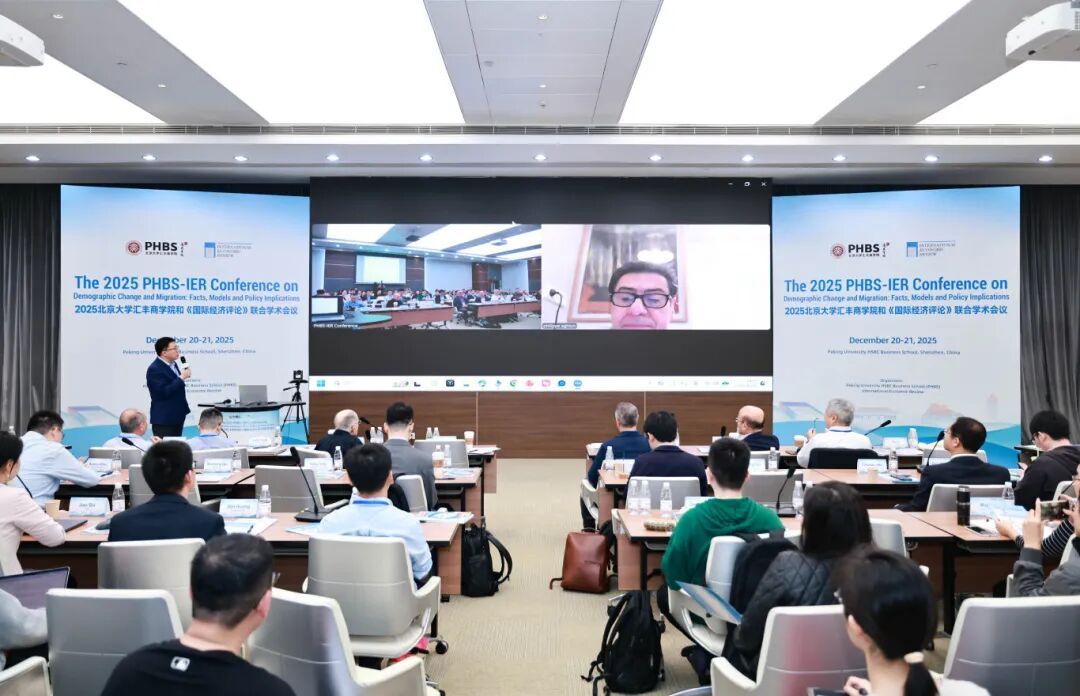
Philippe Aghion
Philippe Aghion, 2025 Nobel laureate in economics, professor at Collège de France, INSEAD, and the London School of Economics and Political Science, introduced the paper titled “Scientific Isolation? The Consequences of Trump's China Initiative on Chinese Research.” Exploiting the implementation of the 2018 “China Initiative” as a quasi-natural experiment, the paper examines its causal impact on Chinese research output. Using the Scopus bibliometric database and a difference-in-differences approach with inverse propensity scores weighting, the authors find that while the initiative had no major quantitative impact on the volume of publications by affected Chinese researchers, it significantly decreased publication quality, as measured by citation counts, publications in top journals, and the H-index of coauthors. The keynote session was chaired by Professor Thomas J. Sargent, the 2011 Nobel laureate in economics and honorary director of the Sargent Institute of Quantitative Economics and Finance at PHBS.
Anson Zhou and Qiu Xincheng
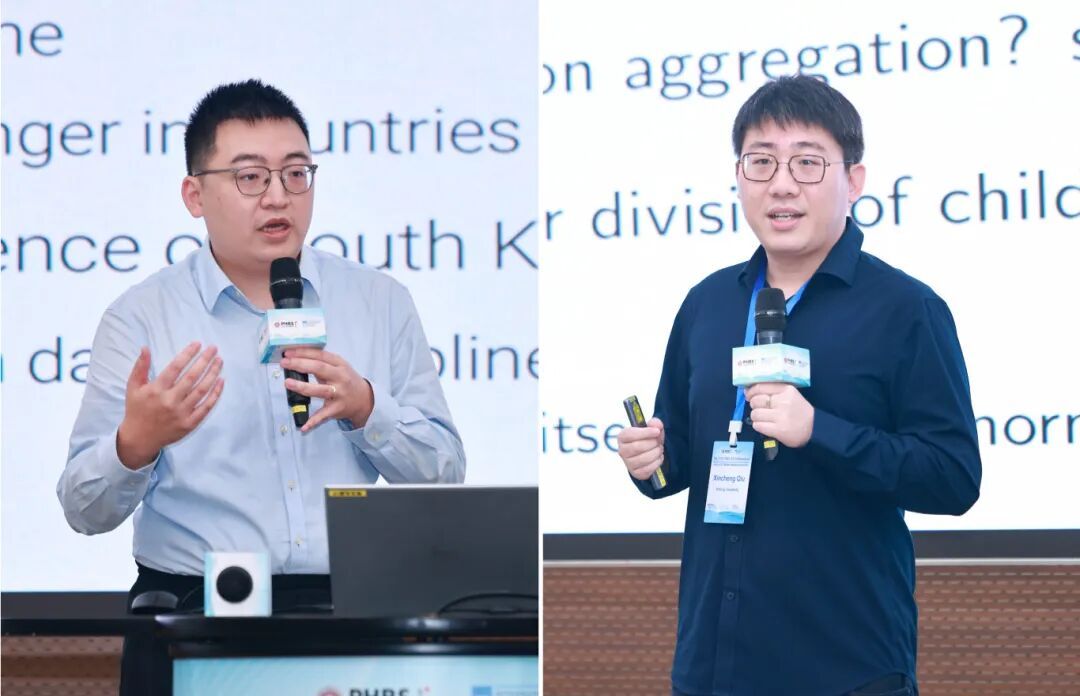
Assistant Professor Anson Zhou from the University of Hong Kong presented the paper “The Fertility Race between Technology and Social Norm.” This paper constructs a dynamic fertility choice model to quantitatively estimate the effect of gender-biased technological progress and social norms on fertility rates by using the South Korea data, and discuss policy implications. The finding shows that intense social pressure and reluctance to adapt can lead to steep fertility decline and entrenched traditional norms. Assistant professor Qiu Xincheng from Peking University served as discussant, noting that the endogenous modeling of social norms is a key contribution of the paper, and raised questions regarding the setup of fertility decisions and the linkage between the model and data.
Shi Zejin and Wu Chunzan
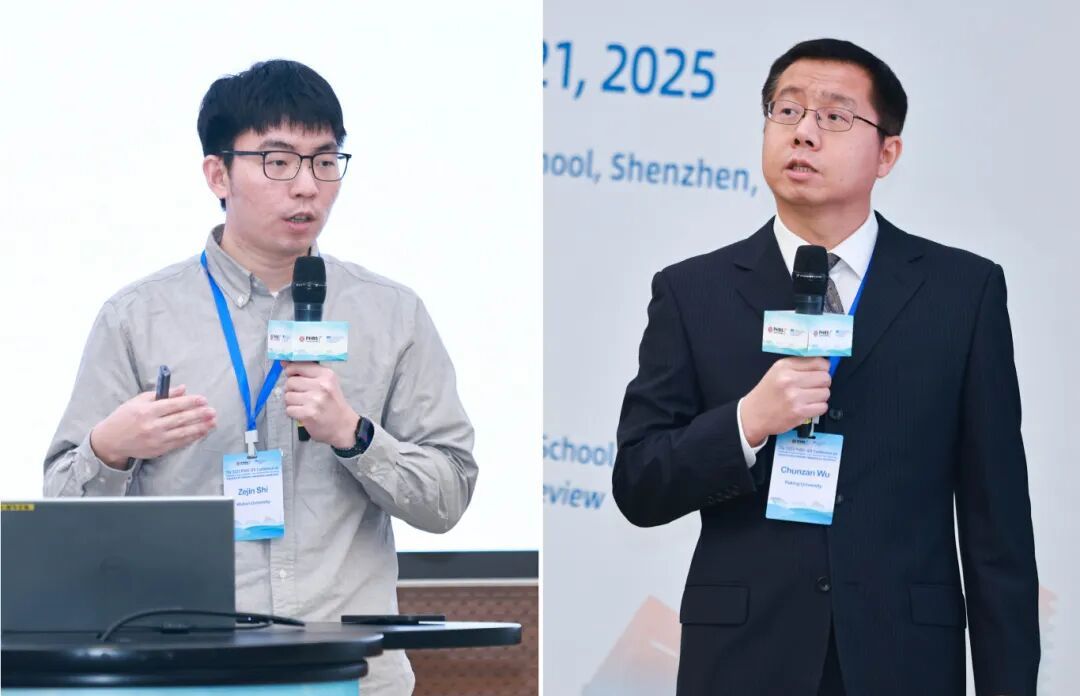
Assistant Professor Shi Zejin from Wuhan University presented the paper titled “Understanding the Evolution of Labor and Marriage Markets from 1968 to 2018.” This paper builds a general equilibrium overlapping generations’ model with both labor and marriage markets to systematically assess the importance of multiple exogenously changing factors on these two markets. The finding shows that the improved labor market opportunities for women and increasing risk of divorce interact with each other and jointly determine family outcomes over time. Assistant Professor Wu Chunzan from Peking University provided feedback, offering suggestions such as model specification of work life cycle and wage shocks.

Zhang Yu and Fang Hanming
Associate Professor Zhang Yu from Peking University presented the paper titled “The Effect of House Prices on Fertility: Evidence from House Purchase Restrictions.” The study employs a quasi-experiment—the implementation of house purchase restrictions—to estimate the causal effect of house prices on fertility and associated mechanism. The finding shows that the house price shock accounted for 10% of the aggregate reduction in births. Professor Fang Hanming from University of Pennsylvania commented the paper, discussing issues such as identification, measurement, alternative channels, and heterogeneous effects.
Li Kai and Chen Zhang
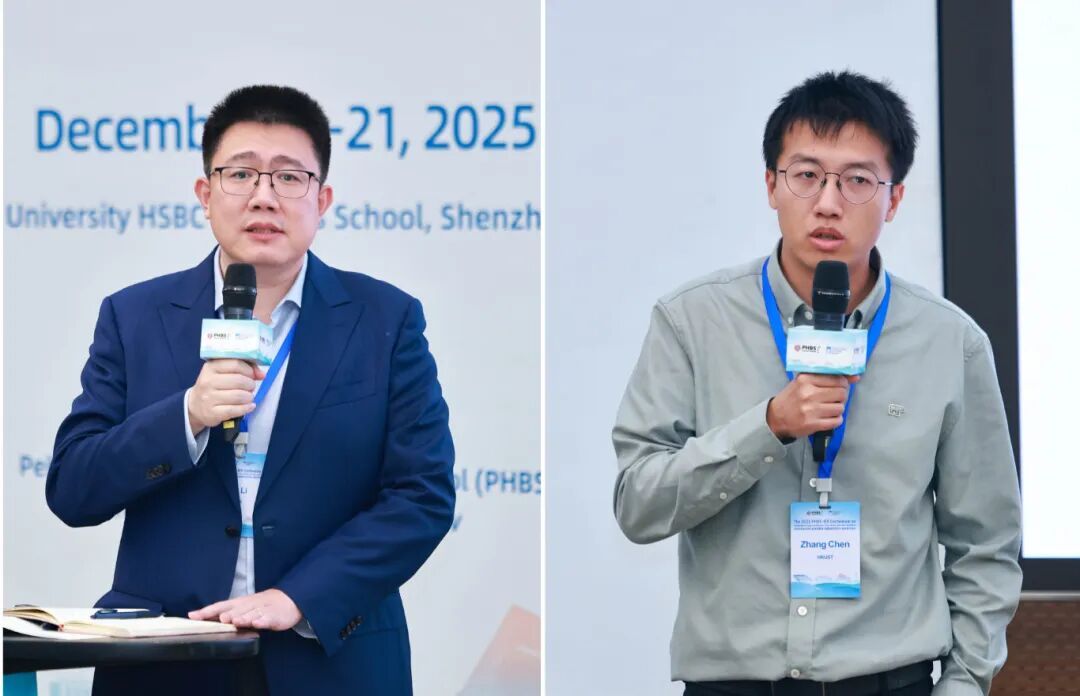
PHBS Professor Kai Li introduced the paper titled “Human Capital as a Driver of Automation: Theory and Evidence from China's College Expansion.” The paper develops a Schumpeterian growth model with an endogenous direction of technical change. Using the 1999 college expansion in China as a quasi-natural experiment, the authors find that an increased supply of high-skilled labor significantly promotes robot adoption via market-size effects, particularly in skill-intensive industries. Assistant Professor Chen Zhang from the Hong Kong University of Science and Technology commented on the paper, suggesting that the authors further explore the model's transition dynamics to better understand the implications of automation for factor shares.
Yang Liyan and Xu Sichuang
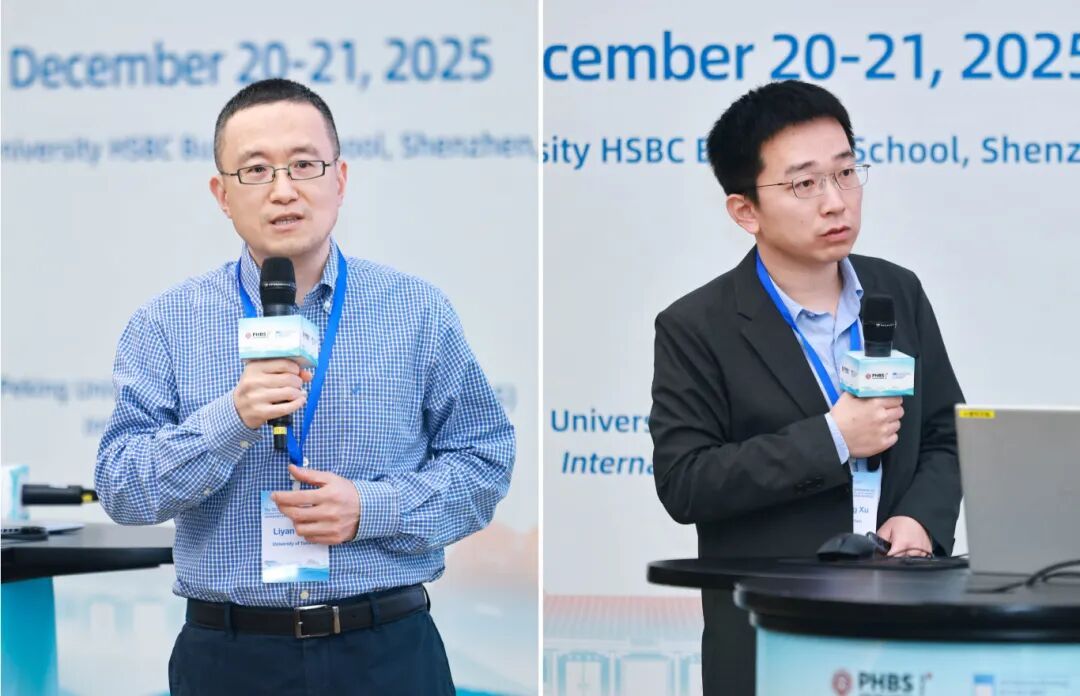
Professor Yang Liyan from the University of Toronto introduced the paper titled “Does Digitalization Widen Labor Income Inequality?” The paper constructs a unified growth model to examine the impact of digitalization on income distribution by incorporating the “routine obsolescence effect” on the labor demand side and the “time modulation effect” on the supply side. This study highlights that the inclusion of the supply-side mechanism can lead to non-monotonic patterns in inequality, distinguishing digitalization from simple automation. Assistant Professor Xu Sichuang of the Chinese University of Hong Kong, Shenzhen suggested incorporating visual illustrations to facilitate the understanding of the underlying mechanisms, and discussed the additional aggregate impacts on output growth and welfare implications.
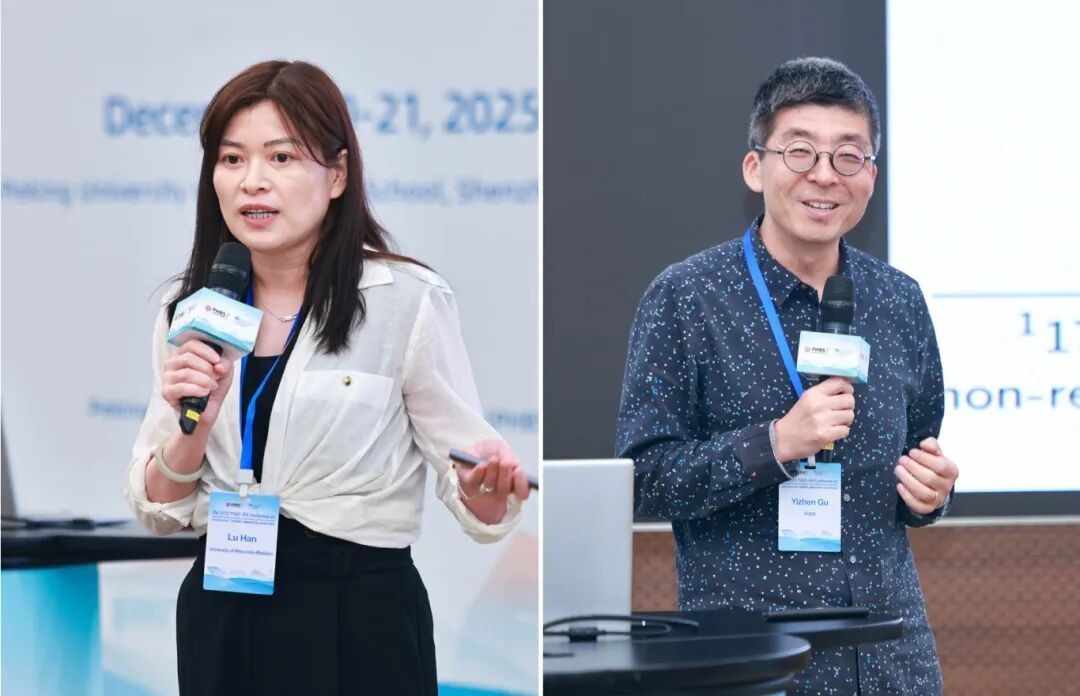
Han Lu and Gu Yizhen
Professor Han Lu from the University of Wisconsin-Madison presented the paper titled “Housing Affordability and the Mobility of Renters.” Using near-universe panel data of renters in Texas from 2010 to 2019, the paper develops a dynamic discrete choice model of residential mobility characterized by rich heterogeneity. The study finds that despite rising rents, renter mobility remains limited due to high fixed moving costs, variable costs that increase with distance, and local ties accumulated with tenure. Consequently, the welfare burden of rent growth falls disproportionately on low-income groups. PHBS Associate Professor Gu Yizhen suggested further exploration of endogenous tenure choices and supply-side market clearing mechanisms, and recommended incorporating workplace data to distinguish job-driven from housing-driven migration.

Ma Lin and Zhu Xiaodong
Associate Professor Ma Lin from Singapore Management University presented the paper titled "Connectivity and Selective Rural Migration for Agricultural Productivity Gains." Utilizing National Fixed Point Survey data and a dynamic spatial general equilibrium model, the study finds that improved connectivity doubles urbanization speed and increases agricultural output by 2.2%-5.3% despite a shrinking rural workforce. Professor Zhu Xiaodong from the University of Hong Kong reviewed the paper, suggesting a tighter integration between empirical and theoretical components, the inclusion of within-household productivity mechanisms, and the use of non-homothetic preferences.
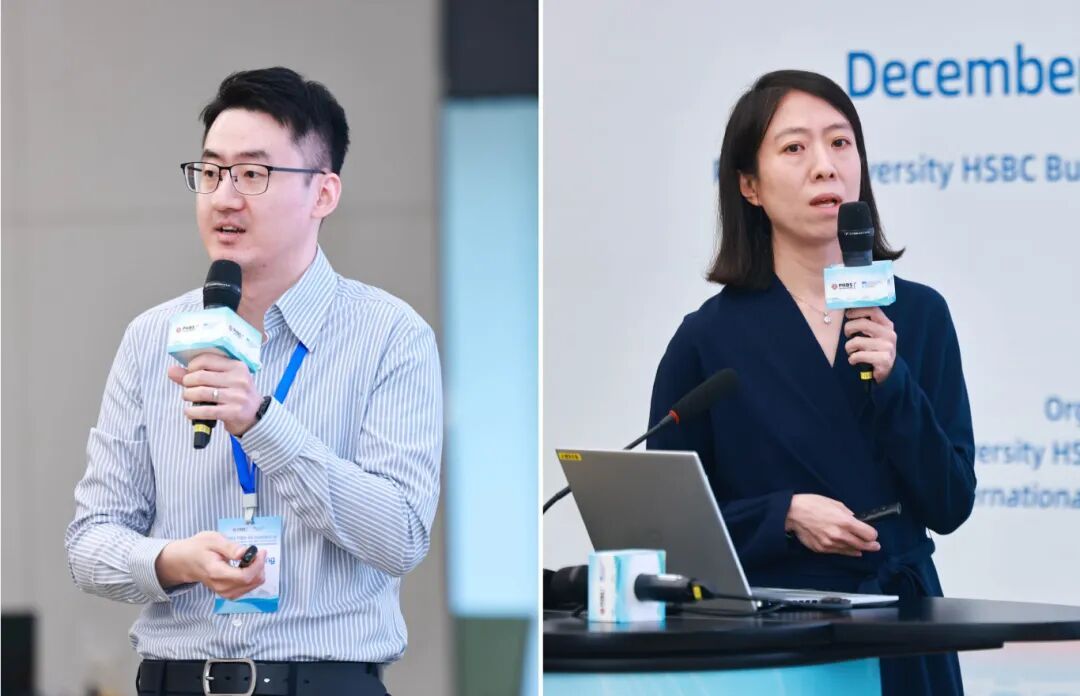
Yang Yu and Yang Tang
Assistant Professor Yang Yu from Peking University presented his paper, “Sex and the City: Spatial Structural Changes and the Marriage Market.” Incorporating migration, production, and local marriage markets, the study develops a spatial general equilibrium framework to examine how service-sector expansion and gender-specific educational shifts contribute to marriage mismatches across cities in China. Using China census data, the authors show that these structural changes account for about 30% of the rise in female singlehood and 12% for males, largely driven by uneven spatial sorting by education and sector. Associate Professor Yang Tang from Nanyang Technological University suggested future work on endogenizing marriage preferences and matching frictions.

Yuta Suzuki and Fan Jingting
Assistant Professor Yuta Suzuki from Shanghai Jiao Tong University presented the paper, "Local Shocks and Regional Dynamics in an Aging Economy." Against the backdrop of rapid population aging, the study explores how demographic transitions influence regional resilience to economic shocks. Utilizing Japanese regional data and a dynamic spatial Overlapping Generations (OLG) model, the research examines the relationship between age-specific migration and regional recovery. The findings indicate that aging reduces labor mobility, making regional adjustments to shocks more sluggish and persistent. Associate Professor Fan Jingting from Cheung Kong Graduate School of Business provided suggestions regarding shock identification, model mechanisms, and the generalizability of the findings.

The group of participants
The conference attracted wide interest and engagement from the academic community. Through an open call for submissions, a total of 110 high-quality papers were received, of which nine were accepted. Among these, six will be included in a special issue of the IER. The special issue’s editorial team—composed of Chen Kaiji, Fang Hanming, Dirk Krueger, Li Kai, and Wang Pengfei—participated throughout the event. Building on this momentum, PHBS and the IER will deepen their collaboration to establish an annual exchange platform, stimulate research vitality, advance high-level economic research, and contribute expertise and insights to the development of economics in Asia and worldwide.
By Hu Weiping, Yu Qi, Sun Bo, and Annie Jin
Source: Research Office and PR & Media Office