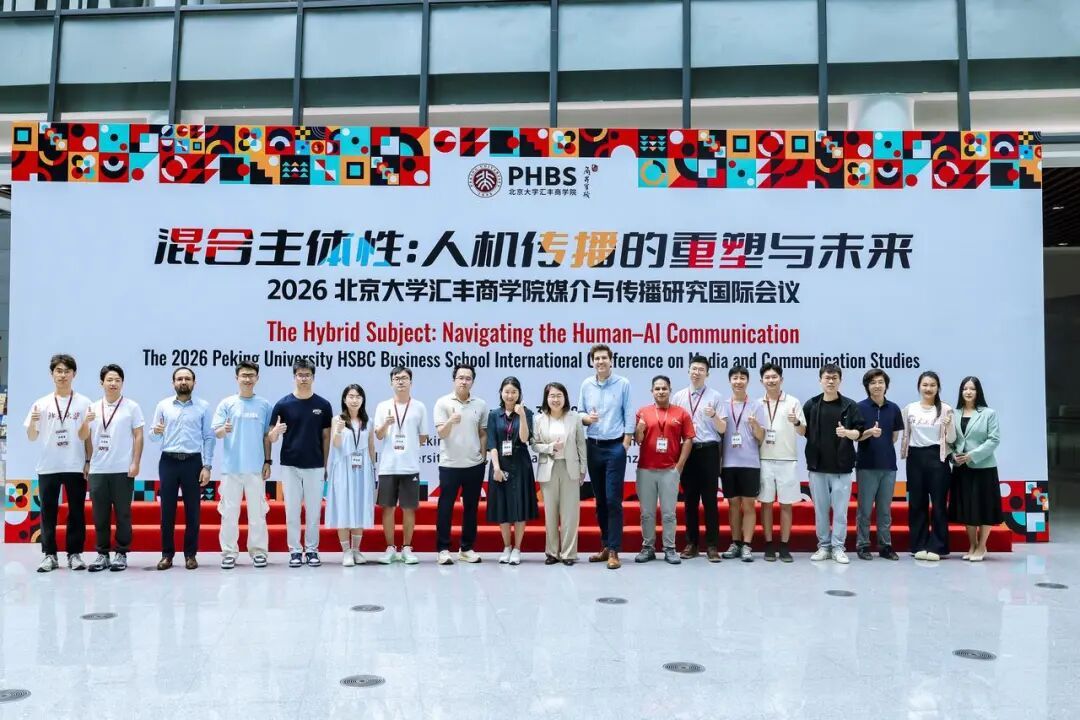
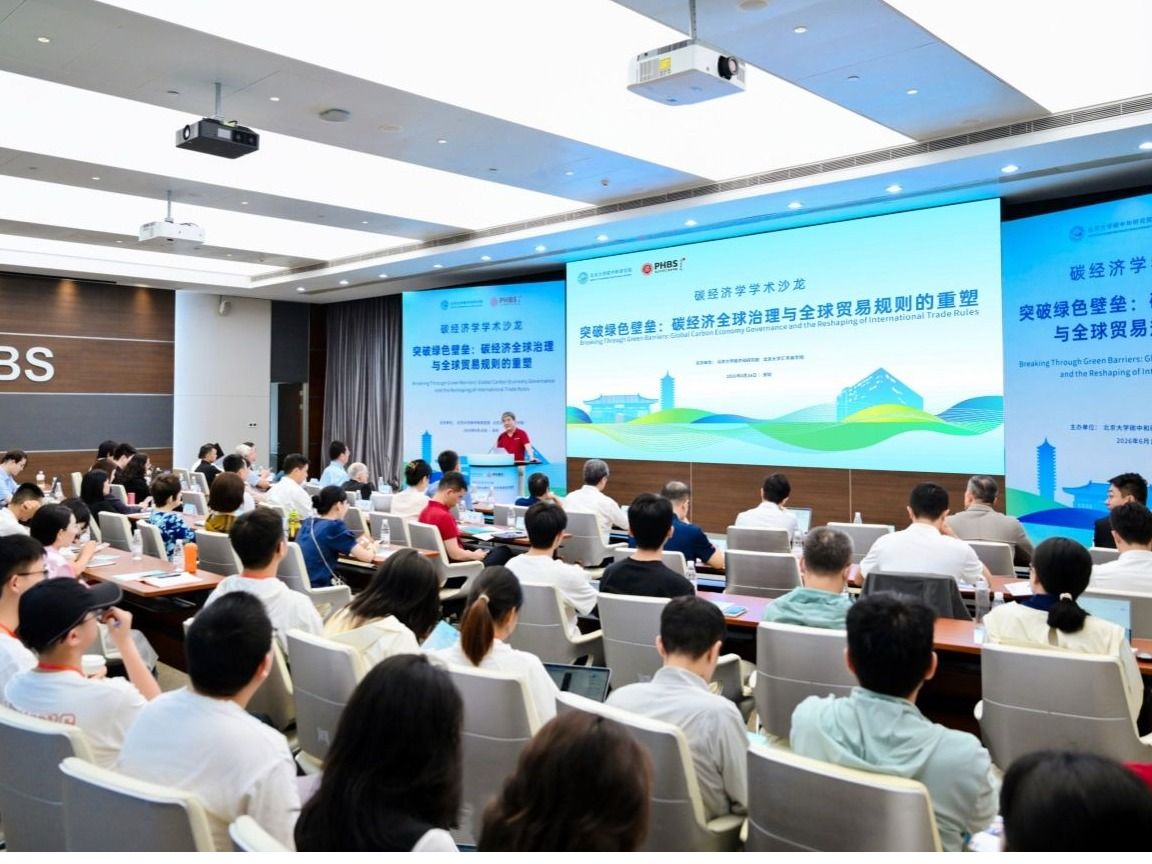
The Peking University HSBC Business School (PHBS) Workshop in Economics was held from June 2 to 3, 2026. The event brought together over a hundred scholars and experts from leading universities in China, the United States, Canada, France, Singapore, Japan, Australia, and other regions to explore the theme of “Economic Theory for the New Era.” The conference was also live‑streamed, attracting nearly 15,000 views.

Attendees listening to the presentations

Wang Pengfei
Wang Pengfei, Boya distinguished professor at Peking University and dean of PHBS, delivered the opening remarks. He noted that economic theory is the core of economics research, providing a crucial framework for understanding economic phenomena, and hoped the conference would foster progress in tackling real-world economic and social challenges.
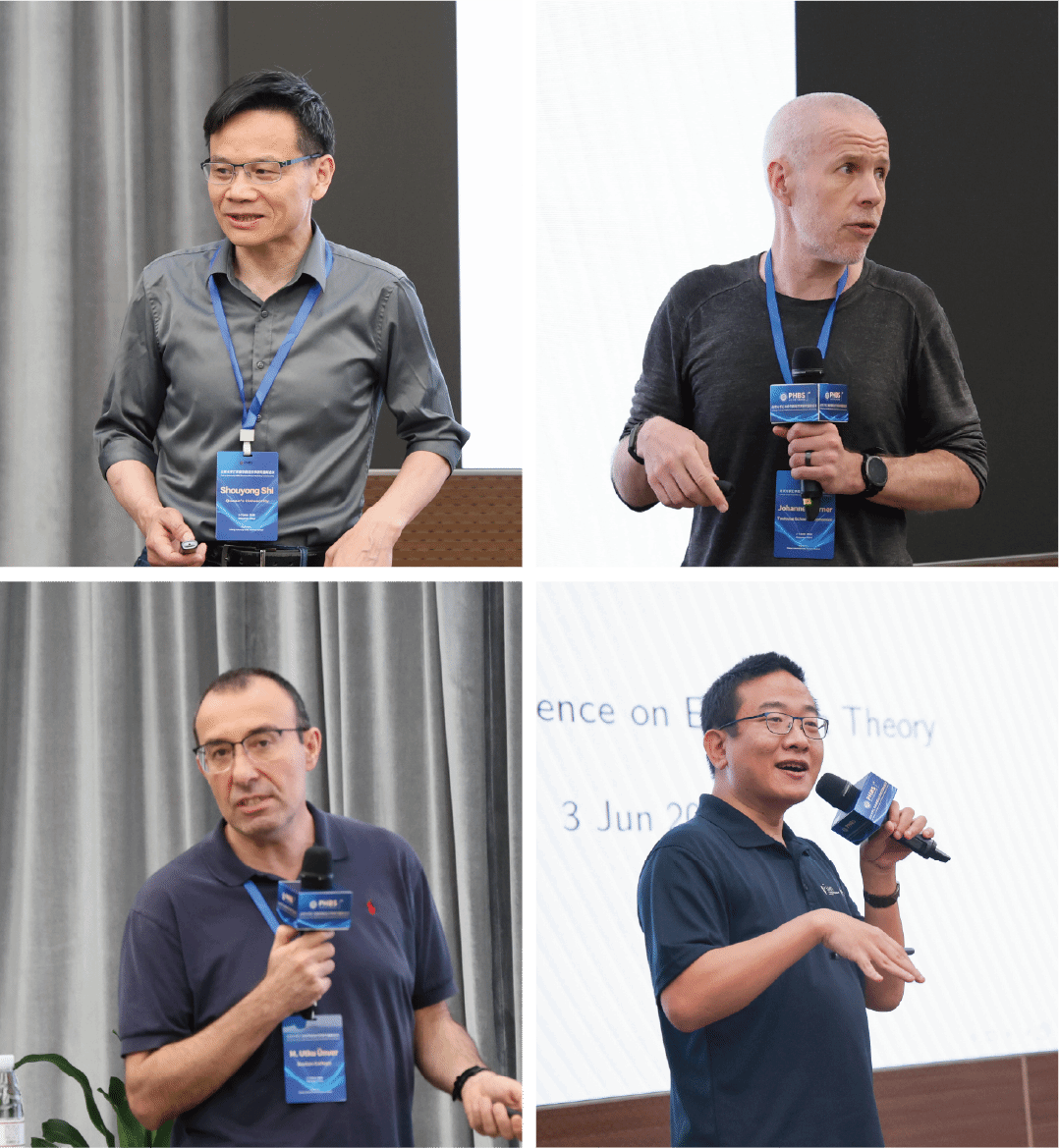
From left to right, top to bottom: Shi Shouyong, Johannes Hörner, M. Utku Ünver, and Li Jiangtao
Four keynote speeches were presented by Shi Shouyong, professor at Queen’s University; Johannes Hörner, CNRS research director at the Toulouse School of Economics; M. Utku Ünver, professor at Boston College; and Li Jiangtao, associate professor at Singapore Management University.
In his keynote titled “Multilateral Meetings and Bilateral Matching with Frictions,” Shi Shouyong presented “Multilateral Meetings and Bilateral Matching with Frictions.” Based on a stochastic meeting and ordered‑selection model, the paper shows that market tightness reshapes trading probabilities, matched‑partner distributions, and the Beveridge curve.
Johannes Hörner delivered a keynote titled “Competition and Consumer Search,” studying how consumers search for match quality when prices are public. Using a continuous‑time dynamic search model, the paper finds that firms first grow through low prices and later raise prices, generating endogenous price dispersion, size dispersion, and equilibrium search.
M. Utku Ünver presented a paper titled “Market Design for Distributional Objectives in (Re) assignment: An Application to Improve the Distribution of Teachers in Schools.” Based on school priority design and the proposed Status-quo Improving Cycles and Chains (SI-CC) mechanism, the study finds that the SI-CC mechanism is strategy-proof and constrained efficient, effectively reducing inter-regional teacher inequality compared to benchmark mechanisms while ensuring high teacher mobility
In his keynote, Li Jiangtao presented a paper titled “Ascending Auctions and Rank Guarantees,” analyzing revenue guarantees of combinatorial ascending auctions (CASA) in complex markets. The study finds that CASA provides robust rank-based revenue guarantees against strategic and distributional uncertainties. An “exposure‑threshold” trade‑off is revealed, which can be resolved through simple menu design using bidder preference knowledge.
Parallel sessions covered a wide range of topics, from search frictions and market design to social learning and contract theory.
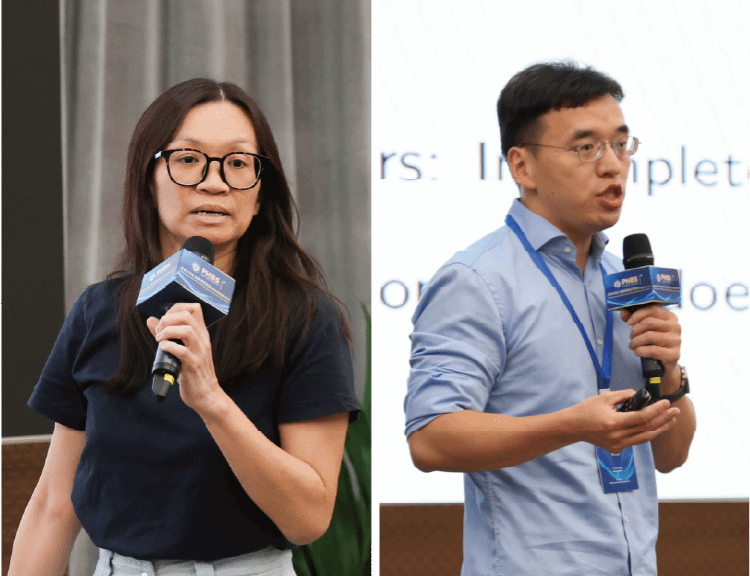
From left to right, Serene Tan and Cai Xiaoming
Session one was moderated by Cai Xiaoming, tenured associate professor at PHBS. Sephorah Mangin, associate professor at the Australian National University, presented a paper titled “Simple Price‑increasing Competition.” Studying how the number of firms affects prices under search frictions , the paper shows that average transaction prices depend on local monopoly probability and matching elasticity; when this term rises, competition can actually increase prices even with constant surplus.
Next, Serene Tan, associate professor at the National University of Singapore, presented a paper titled “Mid‑Worklife Crisis." The study investigates why college graduates’ unemployment falls with age but rises after midlife. Using an overlapping‑generations directed‑search model calibrated with CPS and NLSY data, the paper finds that relative skill loss while employed drives higher unemployment at older ages.
Finally, Cai Xiaoming presented a paper titled “Assortative Matching with Search Frictions and Risk‑Averse Workers.” Based on a directed-search model, the paper studies positive assortative matching between firms and risk-averse workers, revealing that risk aversion raises the complementarity required for positive sorting.

From left to right: Song Yangbo and Lyu Chen
Session two, moderated by Lyu Chen, assistant professor at PHBS, featured two papers. Song Yangbo, associate professor at the Chinese University of Hong Kong, Shenzhen, presented a paper, “Learning‑Optimal Design of Data Markets,” which studies optimal mechanisms for markets where raw data is traded. Based on state-dependent transfer rules, the paper finds that such markets can restore efficient information aggregation and give the designer non-negative profit.
Lyu Chen then introduced his paper titled “Information Design for Social Learning with Patient Agents,” focusing on waiting and free-riding in social learning with patient agents. Using a dynamic information‑design model, the paper finds that no‑pause, time‑varying‑threshold, and over‑recommendation policies encourage early adoption and improve learning efficiency.
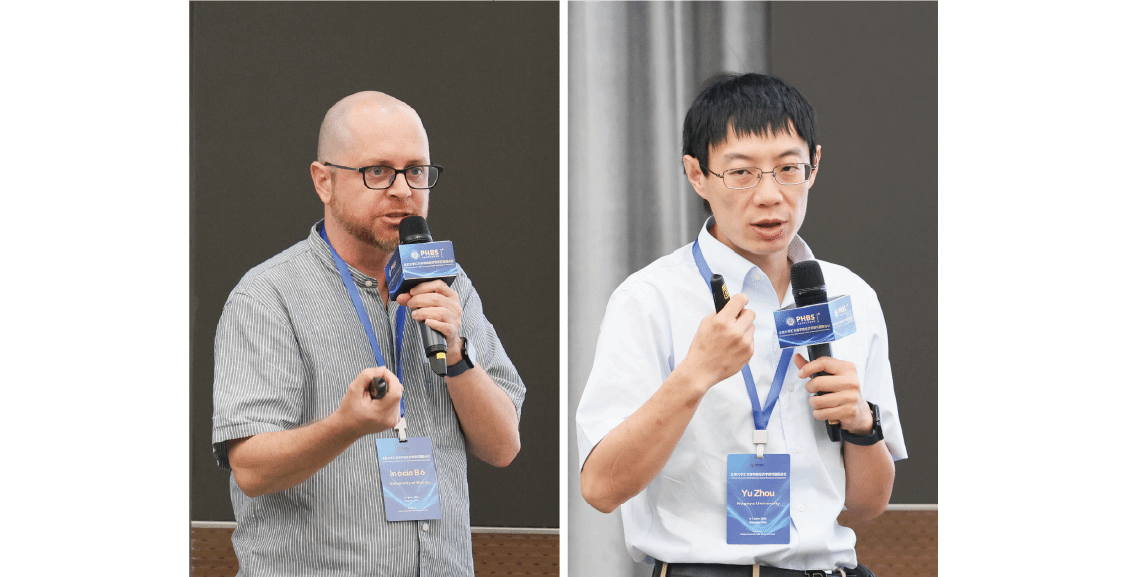
Inácio Bó and Zhou Yu
Moderated by Manshu Khanna, assistant professor at PHBS, session three focused on matching and fairness. Inácio Bó, associate professor at the University of Macau, presented a paper titled “Visibly Fair Mechanisms,” probing visible fairness in priority-based assignments. Based on partial preference message spaces and modular priority mechanisms, the paper characterizes visibly fair mechanisms and identifies conditions for strategy-proofness.
Zhou Yu, associate professor at Nagoya University, presented a paper titled “Semi‑stability in Roommate Problems.” Under the maximal aggregate permission equilibrium (MAPE) framework, the paper shows that every matching economy has a semi‑stable outcome that coincides with MAPE outcomes. Under strict preferences, all semi‑stable outcomes are undominated, though standard structural properties fail to hold.
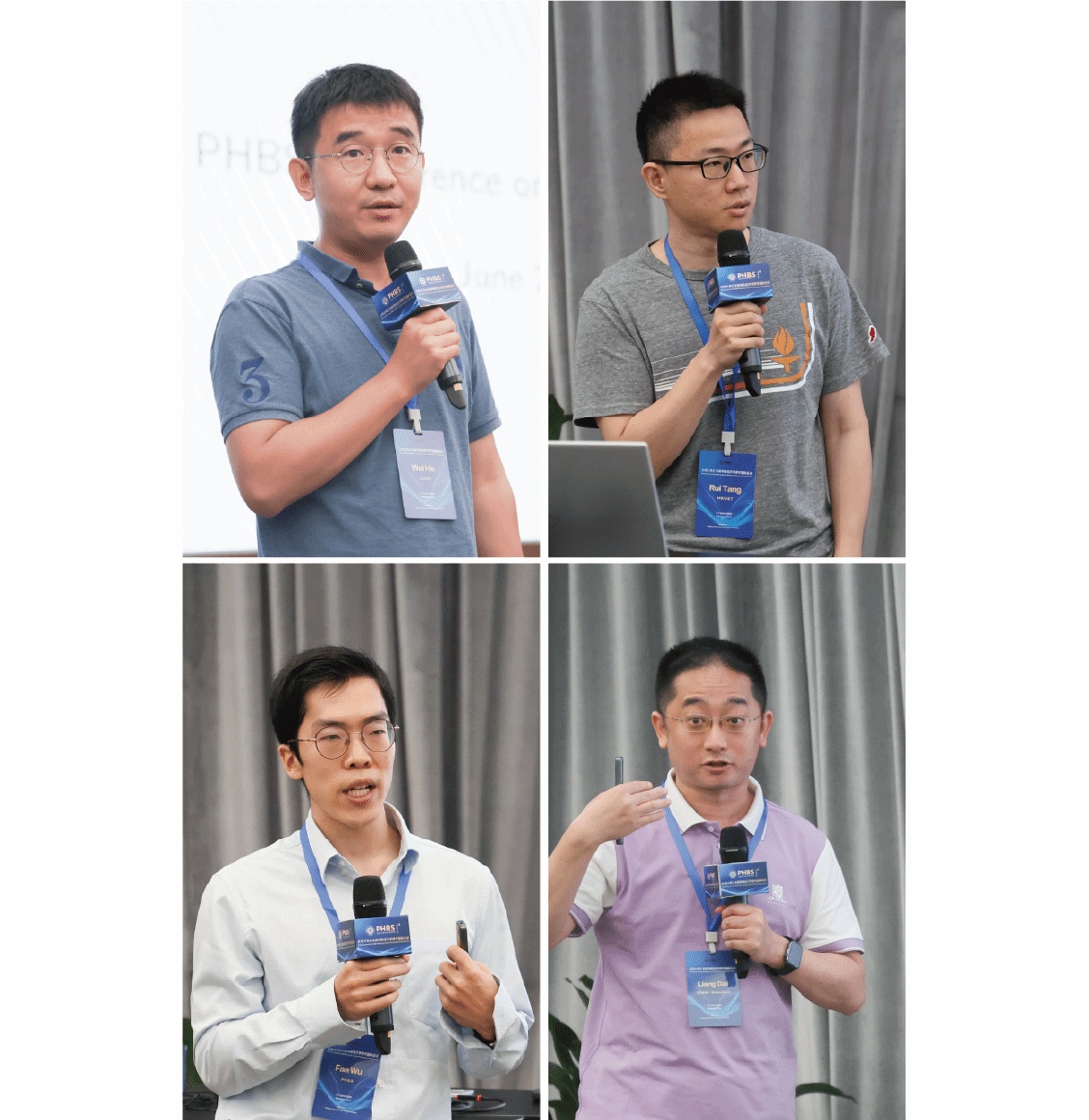
From left to right, top to bottom: He Wei. Tang Rui, Wu Fan, and Dai Liang
Session four, moderated by Wu Fan, assistant professor at PHBS, covered a diverse set of topics. He Wei, associate professor at the Chinese University of Hong Kong, presented a paper titled “Screening through Experiments,” studying how a seller should jointly design buyer learning and dynamic pricing. It reveals that in a sequential screening model, deterministic option pricing is not always optimal; randomized experiment‑price pairs can enlarge the attainable revenue frontier.
Tang Rui, assistant professor at the Hong Kong University of Science and Technology, introduced his paper titled “Revealed Convex Preference, focusing on identification and testing of convex preferences under general budget sets. The paper offers a practical algorithm for testing convexity of preferences, based on a convex-completion framework for weak and strict preference relations.
Wu Fan presented a paper titled “Estimating Nonseparable Selection Models: A Functional Contraction Approach,” which dives into identification of pre-selection distributions in nonseparable selection models. Using a functional-contraction approach, the paper shows that potential outcome distributions can be recovered nonparametrically without exclusion restrictions.
Finally, Dai Liang, assistant professor at the Chinese University of Hong Kong, Shenzhen, presented a paper titled “The Fragile Promise: Job Security and Contract Design under Partial Commitment,” finding that weaker commitment has limited effects on guardian jobs but creates repeated probation and non‑monotone welfare effects in entrepreneurial jobs.
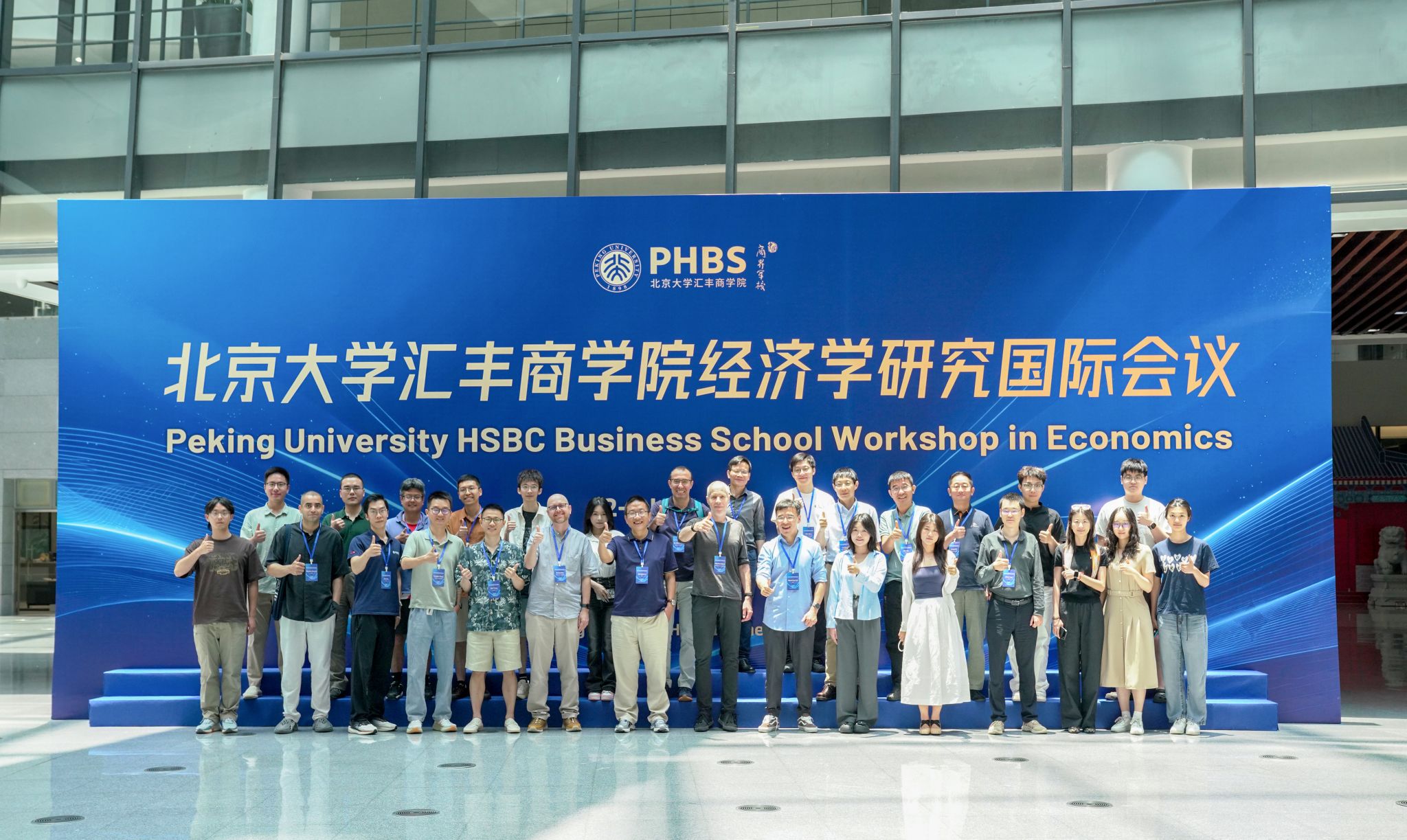
Group photo of participants
The closing remarks were delivered by Cai Xiaoming, on behalf of the organizer. He expressed sincere gratitude to all participating scholars and expressed hope that the conference would further promote cutting‑edge research in economic theory.
Moving forward, PHBS will continue to build international academic exchange platforms, advance frontier research in economic theory, and contribute academic insights to economic innovation in the new era.
By Gao Yuan,Shu Danyi, and Annie Jin